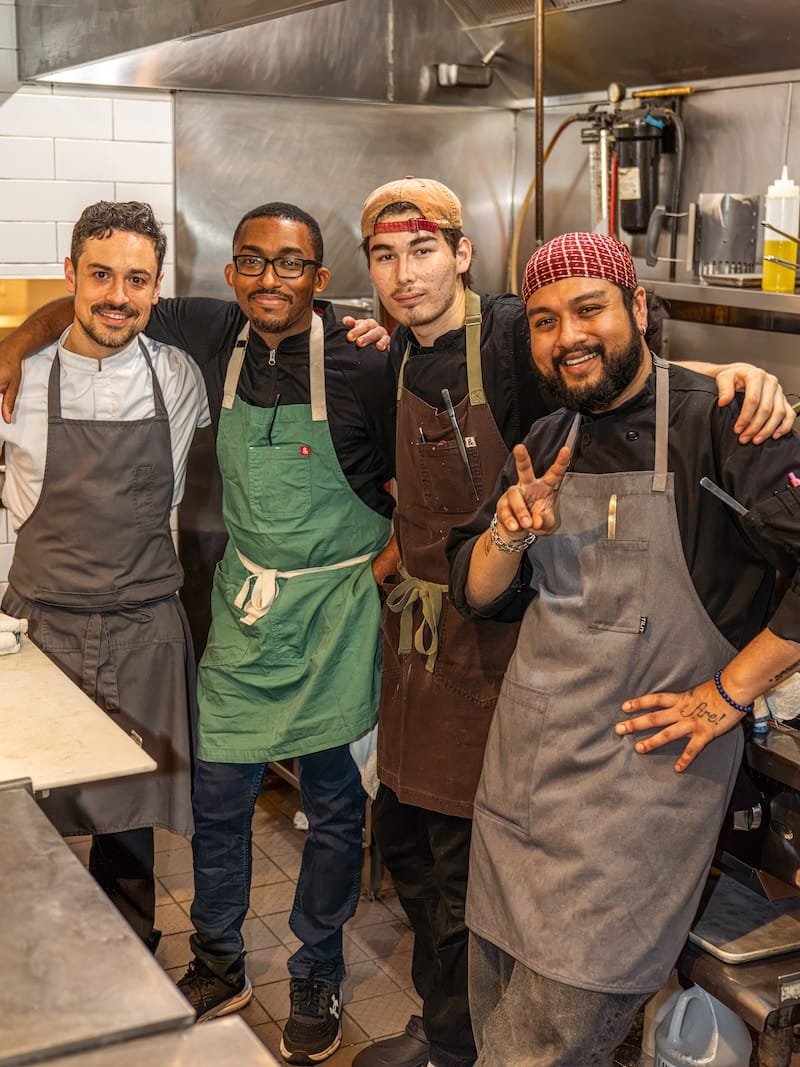
There was a particular excitement in a restaurant dining room on a collab night. The reservation was hard to get, the menu doesn’t exist anywhere else and won’t exist again and two chefs who normally reign supreme over their own kitchens are sharing a stove.
in case you haven’t noticed, the collaboration dinner has become one of the most coveted special events in the restaurant world. In Washington D.C., it’s now a genre unto itself: a Mexican restaurant, Pascual, lets its grill be taken over by guest chefs to create Persian, Italian, and Japanese takes on tacos; eight-time James Beard nominee Amy Brandwein of Centrolina regularly splits four courses at her chef’s table with guest chefs including a “Top Chef” alum from across town; a group of chefs recently came together to serve dinner and raise money for victims of a natural disaster.
What is a Restaurant Collab?
Collab is short for collaboration and refers to a dinner that is a one-off — or a short, limited run — where two or more chefs from different restaurants build a joint menu together, usually in one of either their kitchens. Collab dinners are usually ticketed and prix-fixe, and often get sold out.
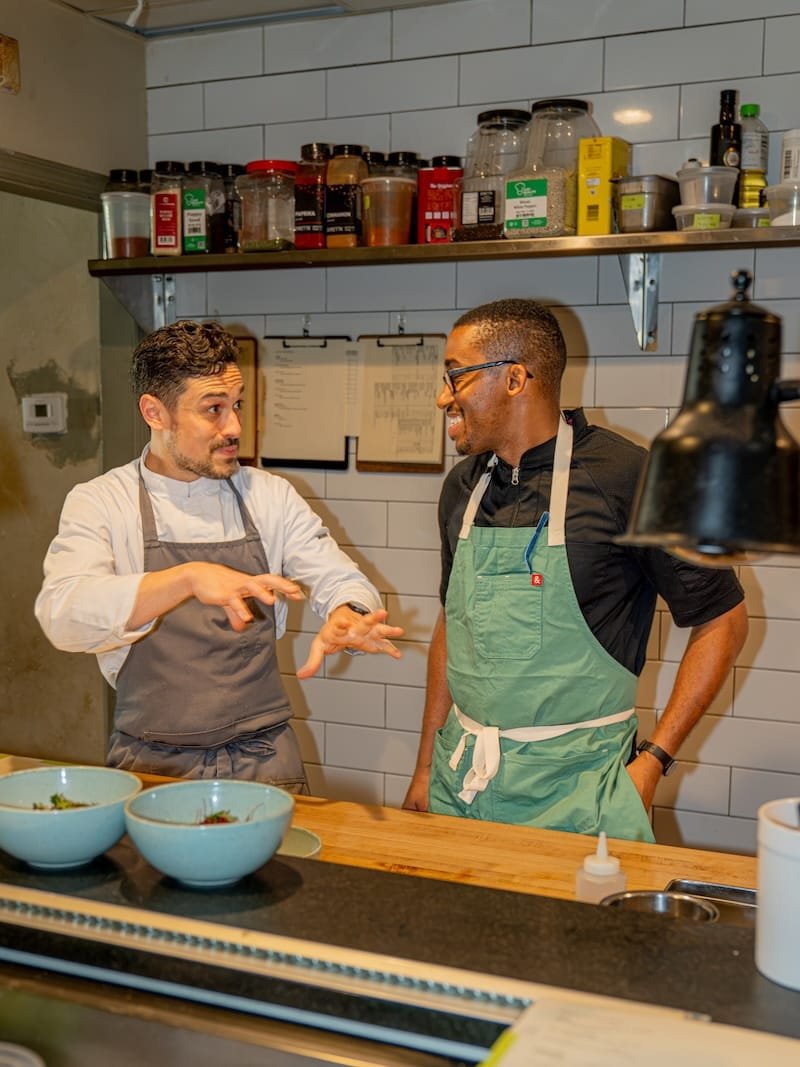
The key element of a collab dinner is teamwork. If a visiting chef simply cooks their own greatest hits in someone else’s dining room, that’s a pop-up (or a kitchen take-over). If they move in for a week while the host steps aside, that’s a residency. A true collaboration produces something neither chef would have come up with alone: alternating courses that contrast each other, dishes that fuse two cuisines, canapés that condense existing concepts into something new, or anything else that might spring from their combined imagination.
Why Chefs Love Them
Ask chefs what draws them to collab dinners and you’ll hear similar answers.
The obvious one is attention. A one-night-only dinner with a celebrated guest generates coverage, sells out on otherwise quiet nights, and reintroduces a restaurant to people who stopped thinking about it after the opening buzz faded.
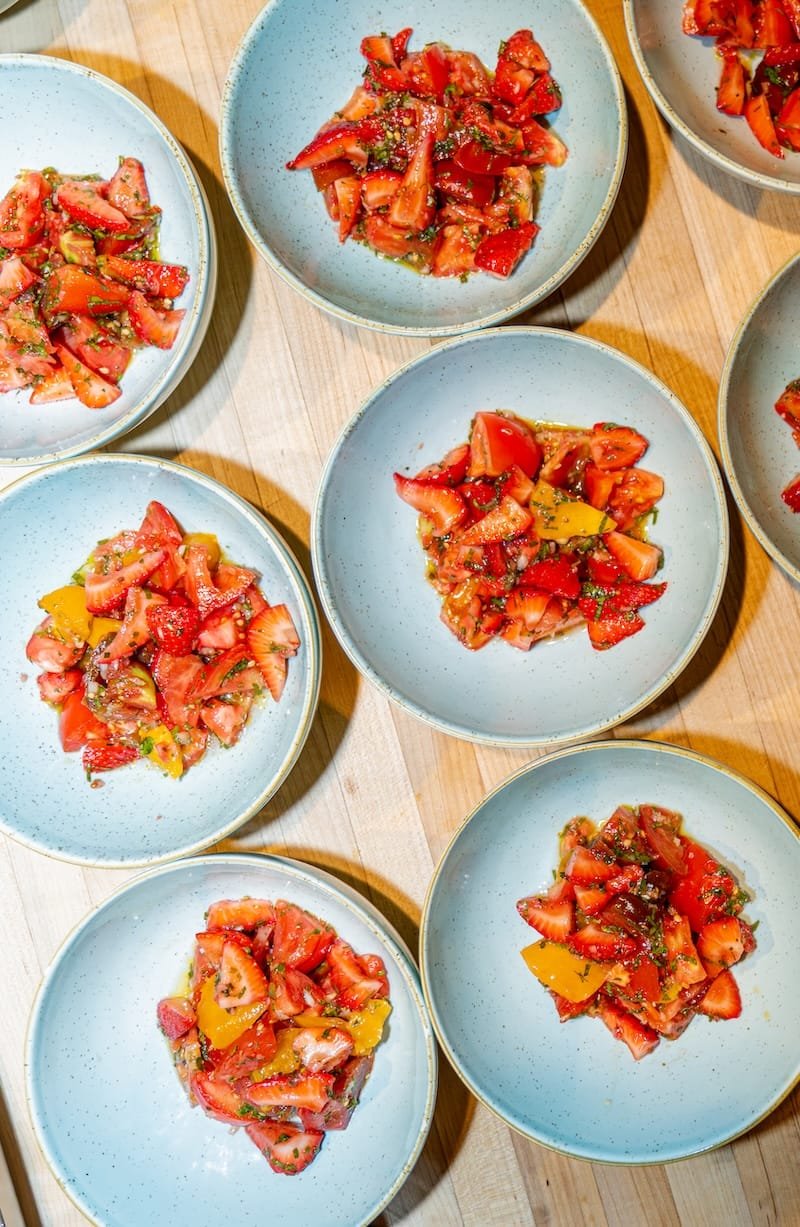
On a more personal level, it allows chefs to flex their creative muscles. Working with other chefs from different regions, with different backgrounds, and skilled in different techniques, provides an opportunity to learn about unfamiliar ingredients and ways to use them, experiment with innovative preparations of dishes, or simply to try cooking a cuisine they haven’t yet explored.
“I love seeing food and techniques that are new to me, and sometimes the most useful thing I take away is a system or a piece of equipment another kitchen swears by. It’s also a chance to cook more creatively and experiment a little. And for our regulars, it’s a chance to be introduced to a new chef and restaurant, and for theirs to discover us,” says chef Russell Smith of Alfreda.
Another reason chefs appreciate collab dinners is the opportunity it provides for their staff. Cooking the same menu for two years is how good line cooks burn out. A collaboration means new techniques, another kitchen’s systems, an outside standard to meet — and, when the invitation is returned, a trip somewhere. It’s professional development and retention disguised as a party.
“Collaboration dinners are exciting for chefs for two reasons. First, we get to cook dishes outside of our repertoires and flex our creative muscles. Second, we get to cook next to someone new, see their thought processes in action, and swap ideas. Different chefs might use different methods to achieve the same end result,” says chef Patrick Benton of Primrose.
Finally, some of these dinners are a great way to support local charities or raise money to help people impacted by environmental disasters. Chefs will often donate a portion of the proceeds of collab dinners to causes close to their heart; or they will use the opportunity to bring awareness and funding to situations like the earthquake in Nepal.
Why You Should Go
Collab dinners give diners the chance to eat dishes you won’t find anywhere else. Two or more creative minds come together produce dishes that aren’t on their kitchen’s menus. Since collab dinners are usually a one-off and meant to be surprising, chefs can be playful with their food; experiment with flavor combinations, introduce exotic ingredients or apply foreign techniques. You’ll get a unique close-up look at the creative process of two kitchens.
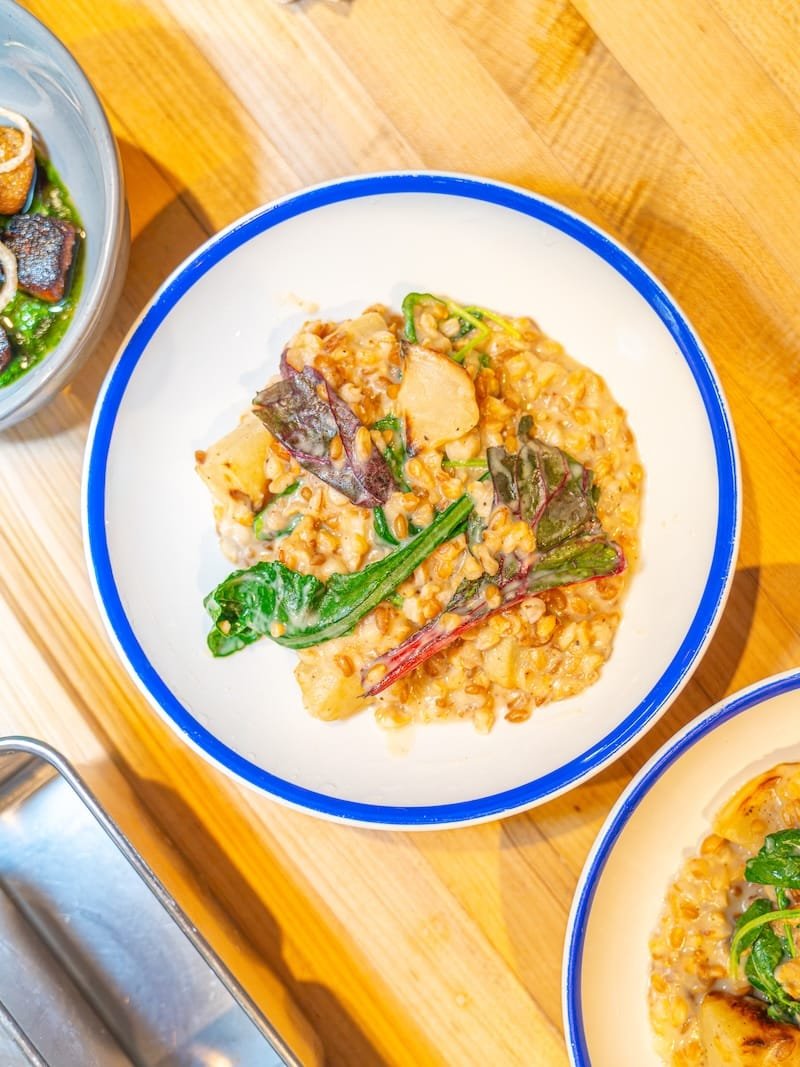
Plus, the dining room hits different. Collab nights draw people who follow food closely or are fans of either (or both) chefs, and the crowd knows what they’re experiencing. Chefs come out of the kitchen. Courses get explained. Dishes that were only just conceived of disappear again within minutes. It’s a once-in-a-lifetime experience. That’s the whole appeal, and it’s not a small one.
As chef Sanjay Mandhaiya of Karravaan, Pappe, and The Grace says, “A chef’s collaboration dinner is an inspiring creative exchange that pushes us out of our comfort zones, allowing us to blend distinct techniques, flavors, and philosophies into a single, cohesive menu. Working alongside a peer in the same kitchen sparks new culinary techniques and refreshes our approach to hospitality, energizing the entire kitchen team. Most importantly, it gives us the rare opportunity to present a truly unique, one-of-a-kind tasting experience directly to a passionate room of guests who appreciate culinary artistry.”
Collan dinners are a great way to support local chefs and restaurants, local causes, and innovative cooking. Search local restaurant websites, restaurant platforms and Instagram to hear about upcoming collab dinners in DC, and be sure to grab tickets quickly! As you can tell, these special dinners sell out fast.